
Science and Stories: a Parable and a Plea
Once upon a time, there were some bright and curious people who wanted to know everything they could about the world. They saw serious problems everywhere and wanted to use their intelligence and powers of observation to help solve them. And so, they looked and listened and asked questions and took notes. They dug down into the depths of the earth and gazed out to the farthest edges of space. They called themselves “scientists”. They found new ideas, built new tools, and piled knowledge upon knowledge. They solved problems and cured diseases and created wonderful things the world had never seen before: ways to see miles away, hear things from the past, talk across oceans, and fly through the air.
But then, time passed, and people got used to the wonders the scientists had brought forth. What had once seemed like miracles now felt commonplace, and people lost sight of how truly wonderful they were. Soon, people began to question and doubt the scientists. “What are they really trying to accomplish?” asked some. “Are they telling us the truth?” How do we know that things really work the way the scientists say they do?” Some went so far as to give credit for all the things the scientists created to magic and happenstance.
And the scientists, who had grown accustomed to speaking the languages of stars and molecules — strings of arcane symbols and strange words built from the bones of dead languages — struggled to make themselves understood to people who lived in the everyday.
This left an opening that grifters and con artists rushed to fill. “We can tell you how the universe works,” said these smooth-talking crooks. “The earth is flat! The stars are mythology! Ignore medicine and clutch these crystals! Reject math and logic and fear invisible demons!”
And then what were the scientists to do? They stood on their chairs and yelled “The dimension of flux is the amount of q flowing per unit time, through a unit area!” They wrote passionate letters, with “These proteins disrupt hydrogen bonds between cellulose and matrix polysaccharides“ spelled out in their best handwriting. They took out a billboard with
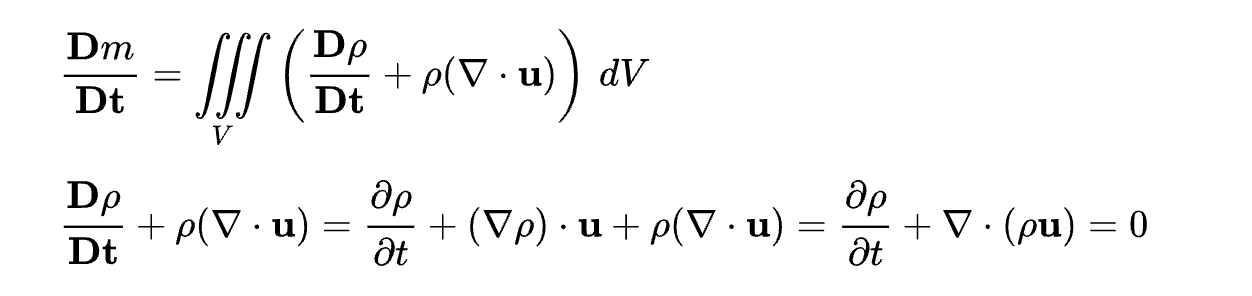
painted on it, as plain as day. And yet it was all to no avail…
I attended a webinar the other day, a panel discussion hosted by a professional organization for people who do science communication. Even though this a world I often work in, I was still taken aback by how much of the conversation was about the need to convince scientists of something that I had assumed was painfully obvious: that the science community needs to do a better job of communicating with the outside world, and the way to do this would be to adopt the strategies used by professional media creators. These strategies are often summarized as “storytelling”.
But no, the very words “story” and “storytelling” are verboten among many serious people of science, and even those science communicators who want to be taken seriously by them. They shun storytelling because they see it as either silliness or flim-flam: the way that babysitters amuse infants, unserious people waste time, and tricksters commit con artistry.
And yes, con artists are good storytellers, as are the people who make escapist entertainments. Stories are their stock in trade. But in noticing this, many scientists have confused cause and effect. The reason the snake oil salesmen have developed their storytelling skills is because they know the same thing that those who educate small children know: that storytelling is crucial to human cognition. The story is nothing less than the fundamental semiotic device by which human minds obtain information. We are hardwired to pay attention when streams of data are presented to us in this very specific way, and to tune them out when they aren’t. To reject storytelling is to reject successful communication.
So what is a story? More than anything, it is an order of operations. In its most classic presentation, it looks like this:
Once upon a time, there was a (something or someone)
This (something or someone) was in (an interesting situation) because of (reasons)
Then an (unexpected thing) happened, causing (a problem), which began (a series of events). This lead to (an exciting consequence)
The problem was solved… but then (something or someone) were never the same again.
This presentation system has been studied and analyzed for thousands of years, from roughly quarter ‘til Aristotle to half past Roland Barthes, and this has yielded plenty of academic terminology for each of these steps, some of which goes like this:
Introduction:
Once upon a time, In a particular setting there was a (something or someone)protagonist
Exposition:
This (something or someone)protagonist was in a (an interesting situation)scenario, which mattered because of (reasons)the stakes
Rising Action:
Then an (unexpected thing)inciting incident happened, causing (a problem)conflict, which began (a series of events) the plot. This lead to (an exciting consequence)the climax
Falling Action and Denouement:
The problem was solvedresolution was achieved…but then the (something or someone)protagonist was never the same again had undergone character development.
Each of these steps are called the “beats”of the story, and once you start looking for them, you’ll find them everywhere — or rather, everywhere that something is well-written, engaging, and entertaining. Things that are boring and forgettable, you soon realize, are missing this structure.
Think of a biography: (1) The subject is born and raised and find their career. (2) They meet interesting people, do interesting things, and achieve early success, but (3) that success is hampered by a flaw in their personality and/or repressive surroundings, which they struggle with, until (4) near the end of their life, they find peace and clarity.
How about a news story? (1) The peaceful small town of Cityburg, (2) home to the state’s largest chemical factory and a championship youth hockey team, (3) was struck by violent earthquakes on Thursday, resulting in dozens of injuries and thousands of dollars in property damage. (4) The quick response from local fire departments kept that damage to a minimum, report local officials, but it is unknown how long the factory will remained closed, and what long-term effect on the local economy that will cause.
Or a sports report: (1) The Milwaukee Brewers hosted the Boston Red Sox yesterday, (2) in a hard-fought pitcher’s duel that remained scoreless through six innings. (3) But then Boston slugger Strongarm Martinez hit a three-run homer in the bottom of the seventh, (4) and Milwaukee was unable to respond, posting their fourth loss in a row and dropping to last place in their division.
This is the dominant device for inserting information successfully into a human mind, so much so that I wonder if it may be the only way to do it.
Even good research papers use this form. This is hard to see, though, for two reasons, which are exactly the reasons that research papers are so inscrutable to anyone who is not already experts in their field: they aren’t written in standard English, and they don’t include the first two beats of the story, skipping immediately to the third.
Scholarly writing forces the reader to bring the beginning of the story with them when they arrive, having received them elsewhere, usually in college or in a previous paper or seminar. When a cardiologist reads a paper about the results of the clinical trials for a new heart disease medicine, they already know, before the they begin reading, who the protagonist is (the human heart), what setting they are found in (the physiology of the human body), the scenario (the overall course of congenital heart disease), and the stakes (poor outcomes for patients). These things might be mentioned in passing, but no paper will give a non-scientist enough of this information to really understand what follows: the action of this particular medication upon a particular biological system. This is the barrier to entry for someone who wants to read and understand — the gate the gatekeepers are keeping, if you will.
And that’s fine. A scholarly paper isn’t meant to be read and understood by anyone off the street. But, it’s important to understand that even though these important beats of the story are being brought in by the reader, a well-written paper is still respecting the rules of storytelling. There is still an inciting incident which causes conflict – or, to use different jargon, an unexplained observation which has caused the researchers to question an existing paradigm – followed by a series of attempts to resolve that conflict, building to some kind of conclusion. If it doesn’t have these things, it’s not worth publishing.
Rather than rejecting the idea of storytelling, if scientists want to be better communicators they have to study and understand the craft of the story, perhaps starting by noticing the ways they are already using it (or failing to) in their communications with other scientists. And if they want the general public to understand what they heck they are talking about, they have to tell the whole story, and they have to tell it in language that their audience can understand.
So why don’t they? What are the objections? There seem to be two primary ones. First, that abandoning jargon and respecting story structure would result in an unacceptable lack of specificity. By cramming crude implements of standard spoken English into the childish form of “once upon a time…”, they are in danger of saying something that is not perfectly precise, and they are taught from the very beginning of their scientific training that precision is paramount. To speak imprecisely is more dangerous than not having spoken at all.
This fear — maybe even paranoia — leads to an incredibly pervasive quirk in the way bench scientists speak about their work. Because they care much less about being understood than they do about not being misunderstood, when you ask them what they are doing they will often begin with a long recitation of disclaimers.
I can’t tell you the number of interviews I have conducted that have begun like this:
“So, Doctor, what are you and your team studying?”
“Well, it’s really important for people to know that we are still in very early stages of investigation, so the results we have found will still have to be shown to be repeatable by other labs, and what results we have could be interpreted to show several different outcomes, and all research is subject to any number of factors that can make any early results we have seen are only significant in the context of numerous factors, including the heterogeneity of certain phenotypes of…”
They just as easily have started their explanation this way:
“We were looking at (whatever), and we noticed something strange.”
…which is, of course, a completely accurate description of the way almost all research projects begin. They have been taught, though, that the second of these is dangerously casual and imprecise, for exactly the reasons it is more interesting and memorable: it is clear, and it is clearly the beginning of a story.
The second big objection voiced by scientists is that it is impossible to quickly give someone the context they would need to understand what is really going on. This is objectively true, but not particularly useful. No one everunderstands everything about what is really going on with anything, not even the world’s greatest experts. There is always more data to collect, another viewpoint to consider, a new challenge to the existing model — and isn’t that bottomless well of questions to ask what makes science so interesting in the first place? And so perfect precision is impossible, and in any description of a scientific phenomenon — no matter how scholarly — choices are always made about how precise to be. This almost always comes down to utility: what is the person who is reading this going to do with this information?
And so, yes, good scientific communication does need to be accurate, but just as a children’s book about cars doesn’t need to be nearly as precise about the workings of the crankshaft of a ‘77 Ford Pinto as a mechanic’s repair manual, an article about astronomy in a popular magazine doesn’t need the mathematical language of astrophysics in order to be both accurate and useful to its audience. What it needs is a genuine desire to share something interesting, the courage to speak plainly, and a basic understanding of how to tell a good story.
Which brings us back to where we began. Very, very few scientists know how to tell good stories, and most of the rest don’t care to learn. Far too many scientists — and frankly, a startling number of science communicators — do not believe that storytelling is a valuable craft. They are mistaken. Stories are a naturally occurring phenomenon of the human mind, and their structure and action upon consciousness have been as well-studied as the structure of the atom or the solar system. The more the scientific community respects this and learns to tell good stories about their work, the more they will successfully convey, and the more they will achieve support their works need from funders, voters, and policymakers who don’t speak science. Then we’ll all live happily ever after.